📅 Last Updated: May 20, 2026 | Reviewed by Aaron (Owner & Designer)
RVers who know your struggles design and build our gear. It delivers durability, ease of use, and fair pricing—unlike flimsy or overpriced alternatives. Carrying the right essential gold prospecting gear makes the difference between a bucket of black sand and a vial full of color. We curated this 2026 checklist to focus on high-retention tools that prioritize the recovery of fine flour gold. Many prospectors lose their best finds because they use outdated riffle designs or slick plastic pans. We offer modern, rugged alternatives that handle heavy gravel and remote field use with ease. You gain a more efficient workflow and better results when you invest in gear engineered for performance. Prepare your kit today and ensure every shovelful of dirt brings you closer to the motherlode.
For the weekend hobbyist, gold prospecting is one of the most rewarding ways to get outdoors. It’s a treasure hunt, a history lesson, and a hands-on science experiment all rolled into one. But to turn a day of digging into a day of finding, you need the right tools. This guide covers the 7 essential gold prospecting gear items that will set you up for success. We’ll take you from bare-handed beginner to a confident hobbyist.
What essential gold prospecting gear do I need for successful mining?
For successful gold mining, a weekend hobbyist needs essential gear to find, classify, and secure the gold. The most critical items include a set of classifiers to sift material, a quality gold pan to separate the gold, a snuffer bottle to collect your finds, and a sluice to process more material. This guide provides a complete checklist of the 7 must-have items that turn a day in the creek into a successful adventure.
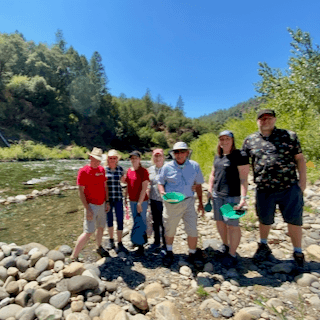
More Than Gear: An Adventure for the Whole Family
At Hitched4fun, we believe the best experiences are about creating lasting memories. We call this guiding philosophy The Hitched4fun Memory Triangle™. Like a fire, a truly memorable trip needs three key ingredients: Connection, Adventure, and Presence.
Gold prospecting is one of the rare activities that delivers all three.
- Adventure (The Experience): It’s the thrill of the hunt. You’re actively searching for precious metal. Every pan-full holds a new possibility, and the excitement of finding your first “color” is an experience you’ll never forget.
- Connection (The Bond): Prospecting is a perfect family activity. It’s a wonderful way to work together, teach kids patience, and share in the excitement of a shared goal. You’re not just playing near each other; you’re on a team, sharing a single story.
- Presence (The Moment): You cannot successfully pan for gold while checking your phone. It requires your full attention—feeling the material in the pan, watching the water work, focusing your eyes to spot the tiny flakes. It pulls you completely into the “here and now.”
This gear isn’t just an investment in a hobby; it’s an investment in creating these moments.
The 7 Essential Gear Items for Weekend Prospectors
Ready to get started? We’ve structured this checklist as a step-by-step process, from finding a spot to securing your gold.
Before the Gear: Know Where to Go
This is the secret zero-step most beginners miss. The best gear is useless if you’re not in a place that has gold. The #1 challenge for hobbyists is finding legal, gold-bearing land to explore. You can’t just hop a fence or start digging in a national park.
This is where you get a massive head start. Instead of spending weeks guessing, you can join a community that has already done the work for you.
Essential Item #1: Gold Prospectors Association of America (GPAA) 3-Year Membership
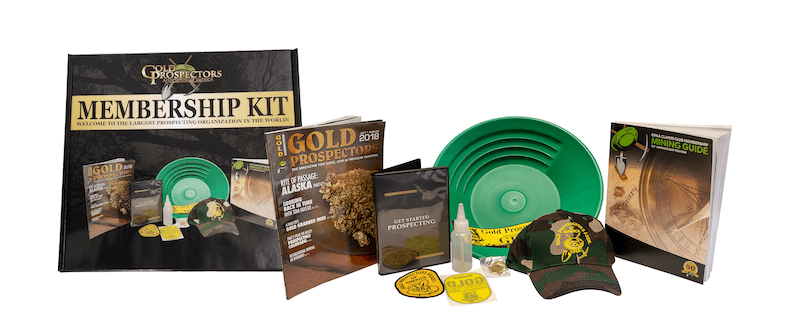
We consider this an essential “tool.” A GPAA Membership is your key to the kingdom. It grants you access to hundreds of verified, gold-bearing claims all across the United States. It completely solves the “where do I go?” problem. You receive guidebooks, maps, and access to a massive community. Don’t waste your adventure on a spot that has no gold; start where the gold is.
-
Gold Prospecting Membership (3-Year GPAA)
Original price was: $190.00.$155.00Current price is: $155.00.
Step 1: Classify Your Material (Don’t Pan Rocks)
You’ve arrived at your claim and found a promising spot. Your first instinct is to scoop dirt directly into your pan. Stop! That bucket of river gravel is 99% worthless, large rocks. Trying to pan it all is a waste of time and energy.
Your first real job is to “classify,” or sift, your material. You need to get rid of the big rocks and debris to isolate the smaller, heavier materials (called “paydirt”) where the gold hides.
Essential Item #2: Classifier Bundle with Multiple Mesh Sizes
A Classifier Bundle is your back-saver. These sifting screens stack on top of a 5-gallon bucket. You shovel your material in and shake. The 1/2″ mesh catches the big rocks, the 1/4″ catches the pebbles, and so on.
By using a classifier, you reduce a 30-pound bucket of gravel to maybe 5-10 pounds of high-potential paydirt. This makes the next step—panning—infinitely faster and more effective.
-
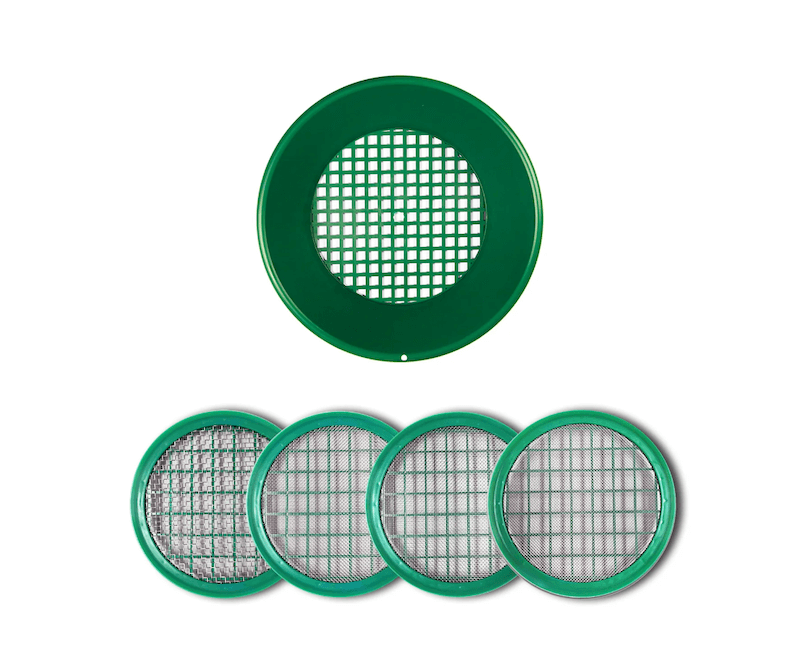
Classifier Bundle – Efficient Gold Prospecting with Multiple Mesh Sizes
$49.95 -
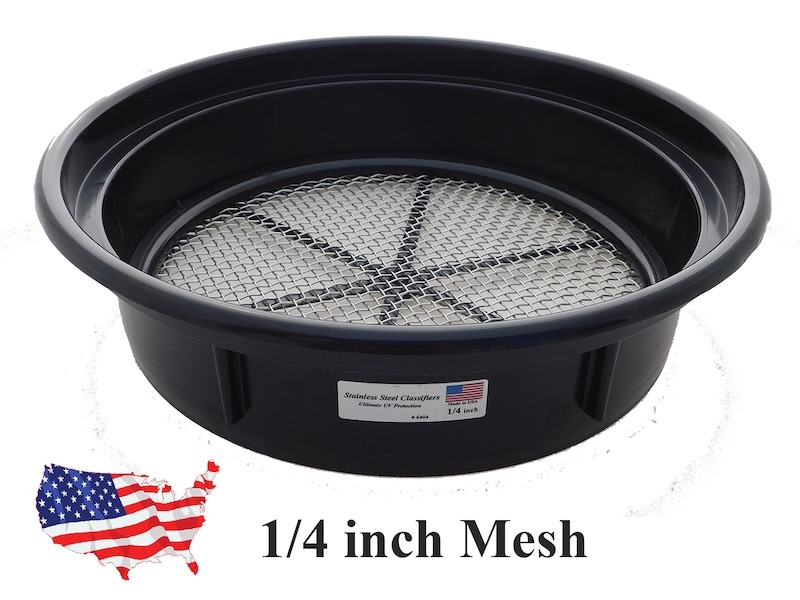
Gold Buddy Classifier
Price range: $9.95 through $23.95
Step 2: The Pan (Your Primary Gold-Finding Tool)
This is the most iconic, timeless, and essential piece of gold prospecting gear. The gold pan is your all-in-one tool for separating heavy gold from lighter sand. Using water, gravity, and a little technique, you’ll wash away the worthless material. This leaves only the “concentrates” and, hopefully, the gold.
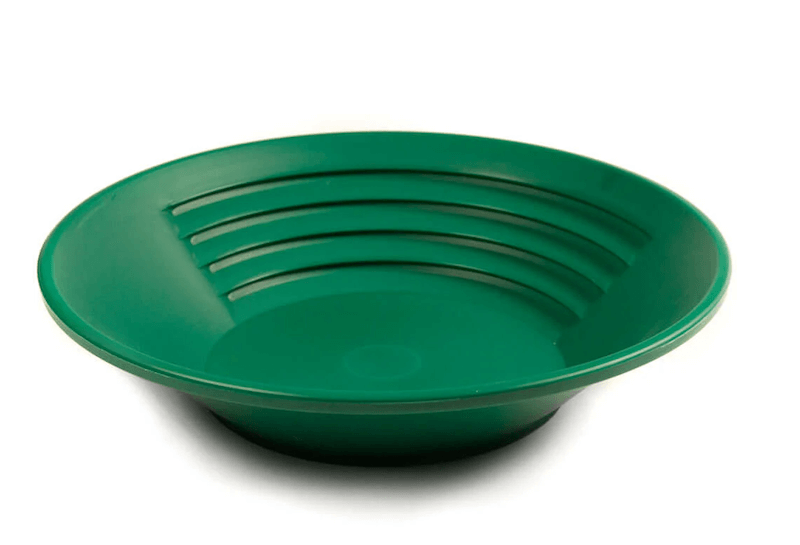
Essential Item #3: 14″ GPAA Gold Catcher Gold Pan
Not all pans are created equal. Forget that old rusty metal pan from the movies. The modern 14″ GPAA Gold Catcher Pan is engineered for success. Its durable, lightweight plastic build won’t rust or get heavy. The deep green color is specifically chosen to make tiny gold flakes (and black sand) stand out visually.
Most importantly, it features molded-in “riffles.” These are special traps on the side of the pan that are scientifically designed to catch fine gold particles, preventing you from accidentally washing them out. This is the single most important tool you will buy.
Step 3: Secure Your Finds (The “Must-Haves”)
You did it! You’ve panned down your material and see two, three, maybe a dozen tiny flakes of gold shining at the bottom of your pan. Now what? Trying to pick them up with your fingers is impossible.
This is the moment of truth. You need a way to securely collect and save every single precious flake.
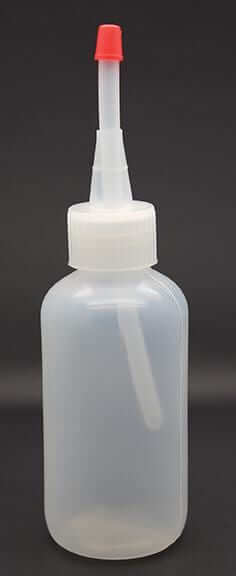
Essential Item #4: Gold Snuffer Bottle
A Gold Snuffer Bottle is a non-negotiable “must-have.” This simple, small plastic bottle is your gold vacuum. You squeeze the bottle, place the plastic tube over a gold flake, and release. Suck! The flake is drawn up into the bottle, safe and sound. It’s the only way to effectively retrieve small gold from your pan without losing it.
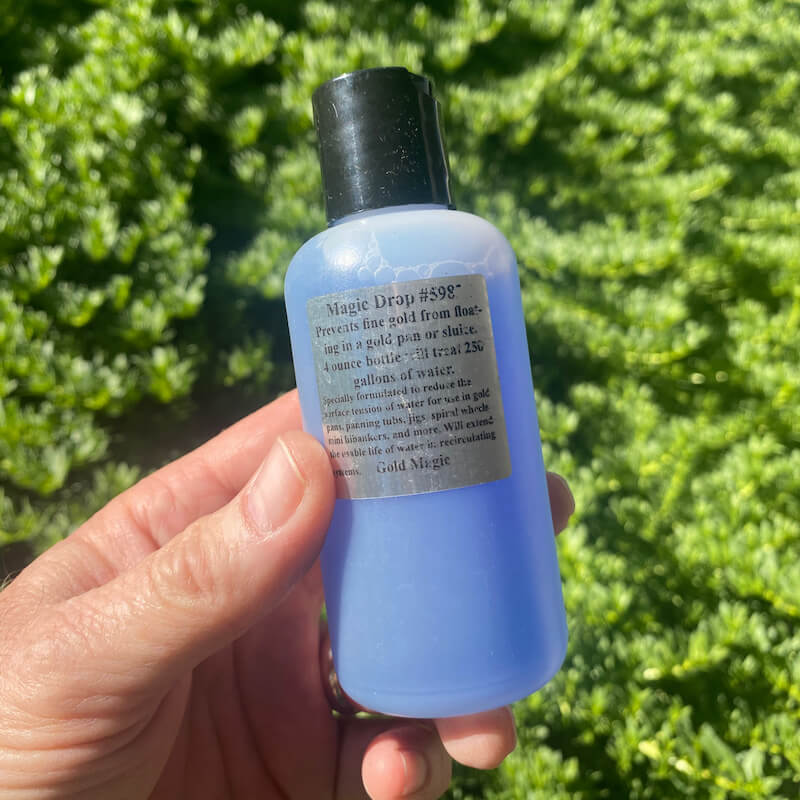
Essential Item #5: Magic Drop (for Fine “Flour Gold”)
Sometimes, you’ll encounter “flour gold.” This gold is so fine that it actually floats on the surface tension of the water, making it impossible to capture. You’ll watch in frustration as your hard-earned gold floats right out of the pan.
That’s where Magic Drop comes in. This is a special “surfactant” solution. One single drop in your pan instantly breaks the water’s surface tension, causing all that floating gold to drop to the bottom where you can capture it with your snuffer bottle.
Step 4: Level Up: Process More Material with a Sluice
You’ve mastered the pan, but you realize panning is slow. You can only process one pan-full at a time. If you want to find more gold, you need to process more material. This is where you upgrade from a simple pan to a “sluice box.”
A sluice is a long channel that uses the river’s current as a machine. You shovel classified paydirt into one end. The water flows through, washing away light material while the heavy gold gets trapped in “riffles” along the bottom.
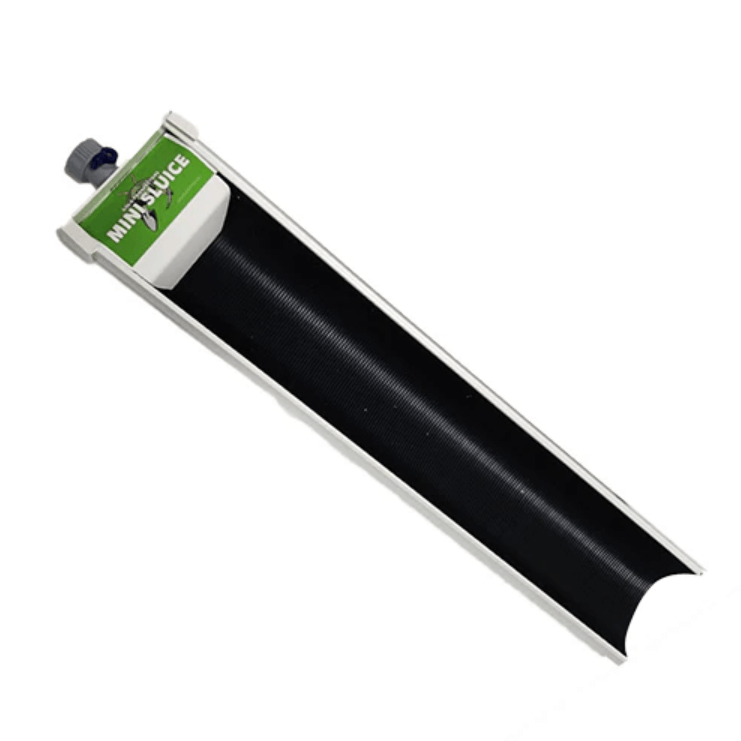
Essential Item #6: GPAA Mini Sluice Concentrator
For the weekend hobbyist, the GPAA Mini Sluice Concentrator is the perfect next step. It’s lightweight, portable, and incredibly efficient. You can easily set it up in a small stream and start processing buckets of material instead of just pans. It’s also fantastic for “clean-up” at home, allowing you to run your concentrates through it again for final separation. This tool is the single biggest leap in increasing your gold recovery.
Step 5: The Final Clean-Up (Automate Your Panning)
After a long, successful day of sluicing, you’re left with about half a bucket of “concentrates.” This is the heavy black sand and fine gravel that your sluice collected. The gold is in there, but it still needs to be separated.
You could spend hours meticulously panning this material by hand. Or, you can let a machine do it for you.
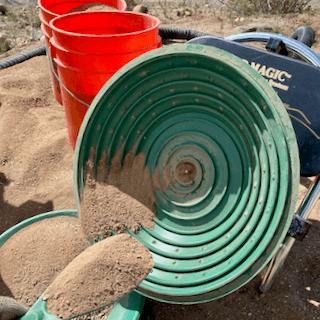
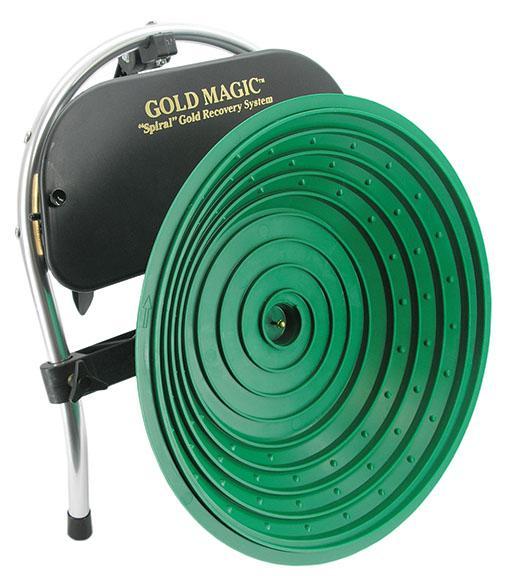
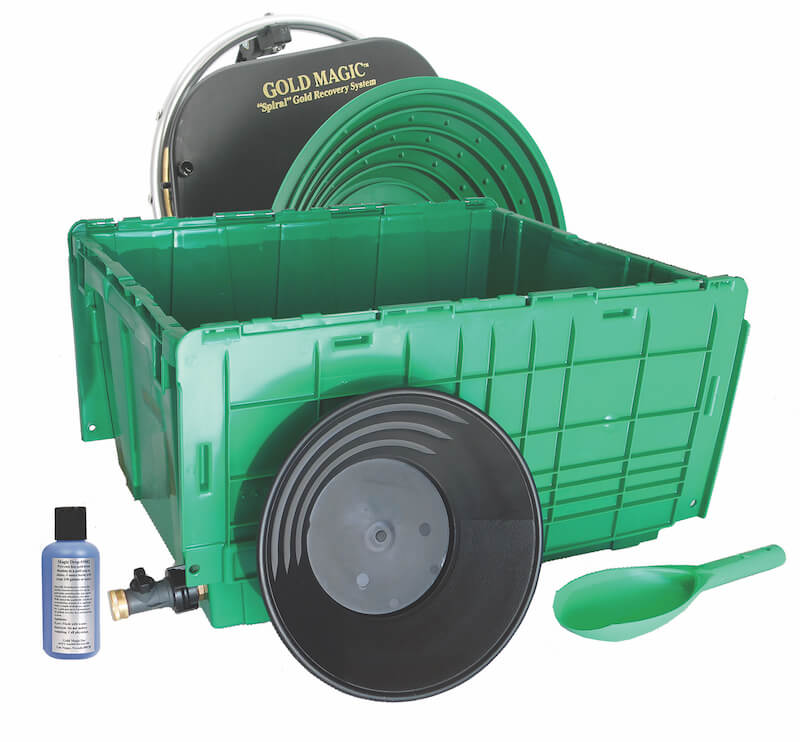
Essential Item #7: Gold Magic 12-E Spiral System Kit
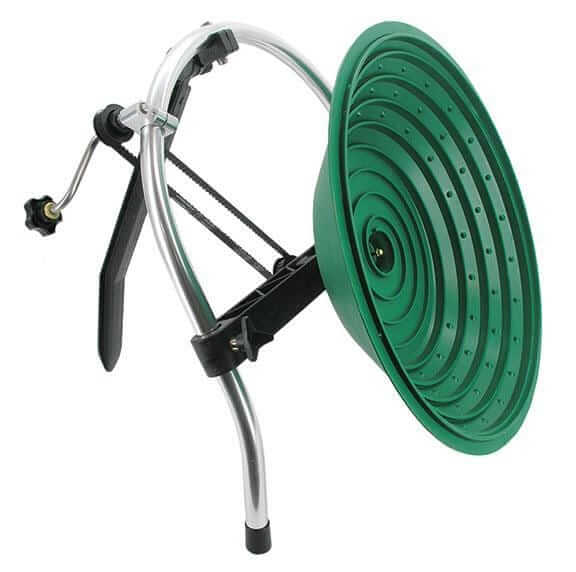
This is the “pro” move for the serious hobbyist. The Gold Magic 12-E Spiral System Kit is a game-changer. This automated panning machine uses a spiral wheel and a small water pump. You pour your concentrates in, and the wheel turns, “panning” the material 240 times a minute.
The spiral ridges carry the heavy gold up and drop it into a catch cup, while the lighter black sand is washed away. It saves you hours of tedious work and recovers over 95% of your gold, even the microscopic flour gold you would have missed by hand.
-
Gold Magic 12-E Spiral Mining Kit
Original price was: $575.75.$555.00Current price is: $555.00. -
Gold Magic 10-M Spiral Recovery Mining System
$249.95 -
Gold Magic 12-E Spiral Recovery Mining System
$475.00
Your Gold Prospecting Questions, Answered
Even with the right gear, you’ll have questions. Here are answers to some of the most common ones we hear.
What is the best equipment to find gold with?
For a true beginner, the “best” gold prospecting equipment starts with two items: a classifier and a high-quality gold pan. This combination is all you actually need to find gold.
The term “best” really means “most efficient.” The equipment that lets you process the most material, the fastest, will yield the most gold. That’s why many hobbyists quickly add a sluice box to their kit. It lets you process 10x the material in the same amount of time.
How long to pan 1 ounce of gold?
This is a common question, but it’s based on the “gold rush” TV shows. For a weekend hobbyist, finding one ounce of gold could take years. An ounce is a massive, life-changing amount of gold.
A successful day is often finding a few visible flakes or small gold nuggets (often called “pickers”). The goal for a hobbyist isn’t to get rich; it’s the thrill of the adventure, the connection with nature, and the excitement of the find.
At what depth is most gold found?
Gold is incredibly heavy—19 times heavier than water. It always sinks and travels the most direct path it can. It settles in places where the water slows down or hits a natural barrier.
Look for gold on “bedrock” (the solid rock layer beneath the gravel), in cracks and crevices, and on the inside bends of rivers and creeks. As the water rushes around a bend, it slows on the inside, dropping its heaviest load (the gold!) right there.
Start Your Gold Prospecting Adventure Today!
Gold prospecting is more than a hobby—it’s an escape. It’s a physical, hands-on activity that connects you to history, nature, and your family. With this checklist of essential gear, you’re not just buying tools; you’re building a kit for creating unforgettable memories.
From the first-timer to the seasoned hobbyist, we have the gear you need to make your next trip a golden one.