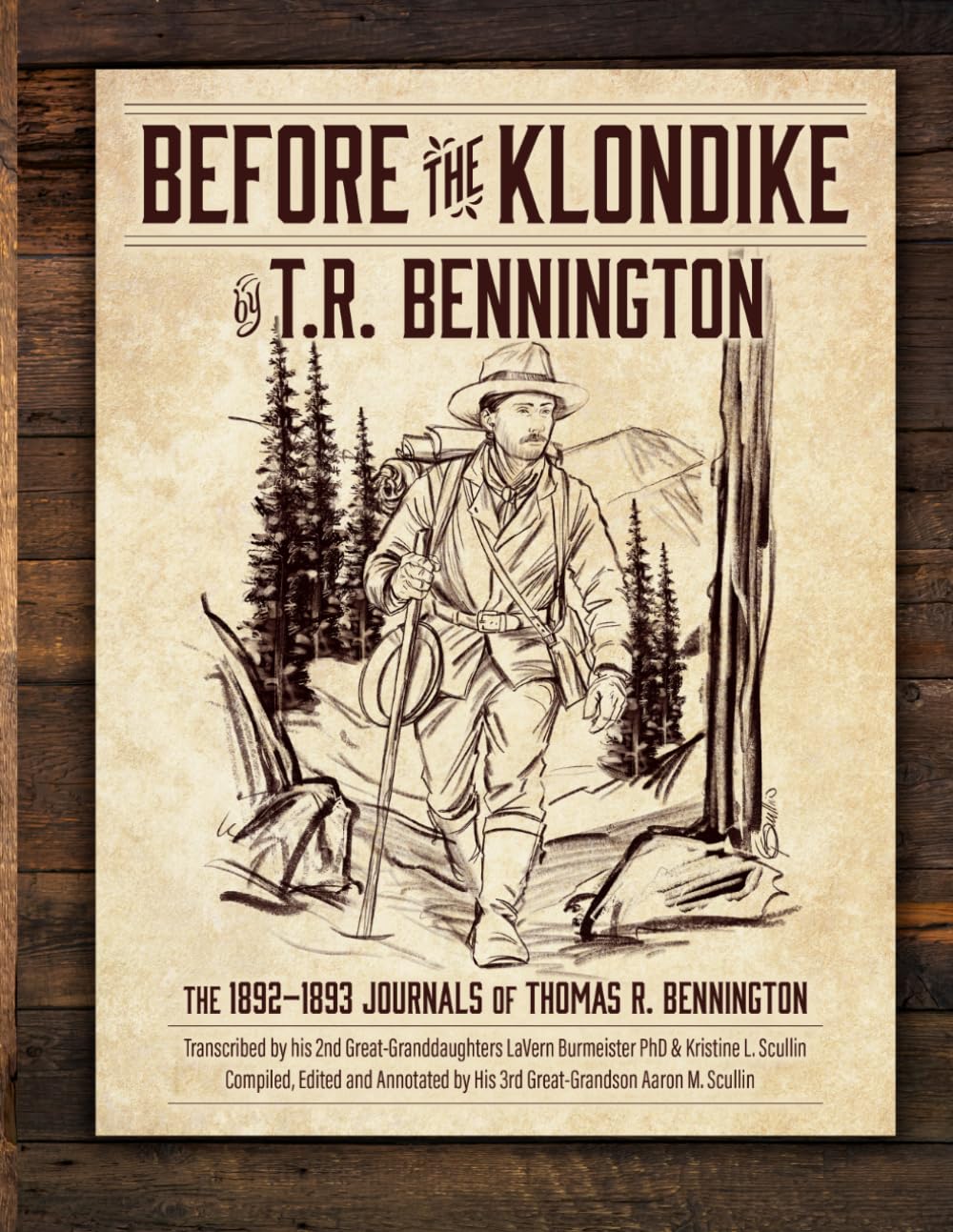
First, most history books begin the story of northern gold in August 1896 on Bonanza Creek. However, the Fortymile River gold rush drew rugged prospectors into the Yukon interior a full decade earlier. Specifically, in 1892 and 1893, our 3rd great-grandfather, Thomas R. Bennington, documented this harsh pre-Klondike frontier in his handwritten daily journals.
Today, you can read his firsthand account in Before the Klondike: The 1892–1893 Journals of Thomas R. Bennington and explore modern gold prospecting gear right here at Hitched4fun.com.
How the Fortymile River Gold Rush Began in 1886
First, prospectors Howard Franklin and Henry Madison struck coarse gold on the Fortymile River in the autumn of 1886. Because the river entered the Yukon roughly forty miles downstream from old Fort Reliance, miners named both the river and their settlement Forty Mile.
Consequently, the Fortymile River gold rush created the first permanent mining camp in the Yukon basin. Moreover, the Fortymile drainage crossed the 141st meridian, spanning both the Alaska interior and Canada’s Yukon territory.
- 1886 Coarse Gold Discovery: First, the strike proved that rich placer gold existed beyond simple river sandbars.
- Established Trading Posts: Second, Fortymile served as the main supply hub and trading post for the interior, including the 1892 Sixtymile River and 1893 Birch Creek strikes.
- Miners’ Meetings & Frontier Law: Finally, before government police arrived, early pioneers settled claim disputes through democratic miners’ meetings.
⛏️ Read an Authentic 1892–1893 Yukon Prospector’s Diary!
In May 1892—four years before the 1896 Klondike stampede—pioneer Thomas R. Bennington sailed from San Francisco aboard the steamship City of Topeka. After crossing Chilkoot Pass and building a wooden boat at Lake Lindeman, he made a 700-mile voyage down the Yukon River to Fortymile, floating right past billions in untouched Klondike gold completely unaware!
Featuring 26 custom Gaia GPS maps, this book is an 🔥 Amazon Top 50 Best Seller. Watch the true story from Before the Klondike: The 1892–1893 Journals of Thomas R. Bennington below:
✍️ Order a Hand-Signed Copy of “Before the Klondike” (Use code KLONDIKESAVER for $10 OFF!)
📦 Or Buy on Amazon (Hardcover, Paperback & Kindle eBook – Affiliate Link)
🗺️ Explore the 1892 Pioneer Trail | 📚 See Top Books Like Klondike Fever
As an Amazon Associate, Hitched4fun earns from qualifying purchases.
Life Inside the 1892–1893 Fortymile Mining Camps
During the Fortymile River gold rush, reaching the diggings required teamwork and grit. First, prospectors used sleds, relay packing, and hired Tlingit packers to move their outfits over Chilkoot Pass. Next, they whipsawed timber at Lake Lindeman and navigated 700 miles of lakes, canyons, and river rapids.
Furthermore, once winter froze the creeks solid, temperatures plunged to 80 degrees below zero at Fortymile. Therefore, early Yukon miners burned wood fires to thaw the permafrost layer by layer before summer water returned for sluicing.
How Modern Prospectors Recover Fine Placer Gold Today
Today, recreational prospectors still visit historic creeks across Alaska, California, Oregon, and Washington. Fortunately, modern RV prospectors do not need to haul heavy iron tools by sled. Instead, you can pack high-efficiency recovery gear right in your camper:
- High-Contrast Gold Pans: First, spot fine color faster using our 14″ GPAA Gold Pan or The 1849 Gold Pan.
- Precision Gravel Classifiers: Second, screen out heavy rocks quickly with a Gold Buddy Classifier or Classifier Bundle.
- Automated Fine Gold Concentrators: Third, process black sand concentrates effortlessly using our Gold Magic 12-E Spiral System Kit or GPAA Mini Sluice.
- Fast Cleanup Accessories: Finally, capture every speck with Gold Magic Drop, a Black Sand Magnet, and our GPAA Mini Starter Kit.
Frequently Asked Questions About the Fortymile River Gold Rush
1. When did the Fortymile River gold rush take place?
First, the Fortymile River gold rush began in 1886 and remained a primary mining center of the Yukon basin until the 1896 Klondike discovery.
2. Why did 1892 prospectors pass the Klondike River without stopping?
Specifically, as documented in Before the Klondike, sub-Arctic mid-July has perpetual twilight from the midnight sun. However, pioneers bypassed the Klondike River because all proven strikes and trading posts were 40 miles downstream at Fortymile!
3. Can recreational prospectors still pan for gold on public and club claims?
Yes! By joining the Gold Prospectors Association of America (GPAA), you can pan on hundreds of active mining claims across the United States.
Ready to experience true Yukon history? Order your hand-signed copy of Before the Klondike today (use code KLONDIKESAVER for $10 OFF), and browse our complete Gold Prospecting Gear Collection for your next RV adventure!